Heat at the edge of the city.
Block-resolution heat exposure & climate action plan
adopted in CAP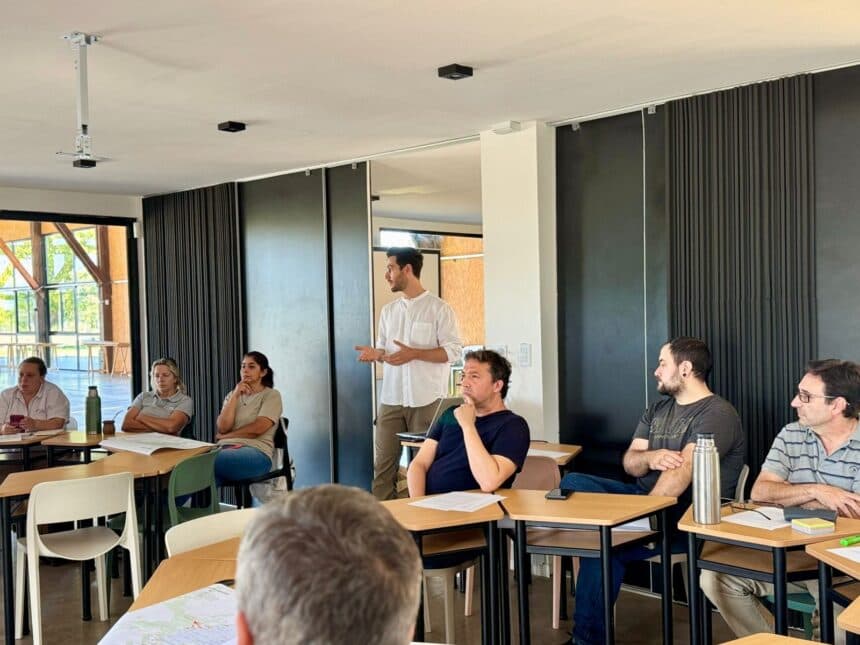 © Municipalidad de Pergamino / See source
- Landsat 8/9 Surface Temperature
- Sentinel-2 NDVI
- OpenStreetMap buildings
- Municipal census blocks
- Field temperature surveys
El desafío
Pergamino sits in the heart of Argentina's agricultural belt, where summer temperatures regularly exceed 40°C. The city of 110,000 has grown rapidly, with new peripheral neighborhoods often lacking tree cover and green space. Municipal staff knew heat was a problem but lacked block-level data to prioritize interventions.
The 2022-2023 heat waves hit hard — emergency room visits spiked, and residents in newer neighborhoods reported indoor temperatures exceeding outdoor readings. The municipal environmental team, led by Valeria Pereyra and Federico Gazaba, wanted evidence to support their climate action plan but didn't have the technical capacity to process satellite data.
Nuestro enfoque
We embedded with the municipal GIS and environmental teams for four months. The work had three phases:
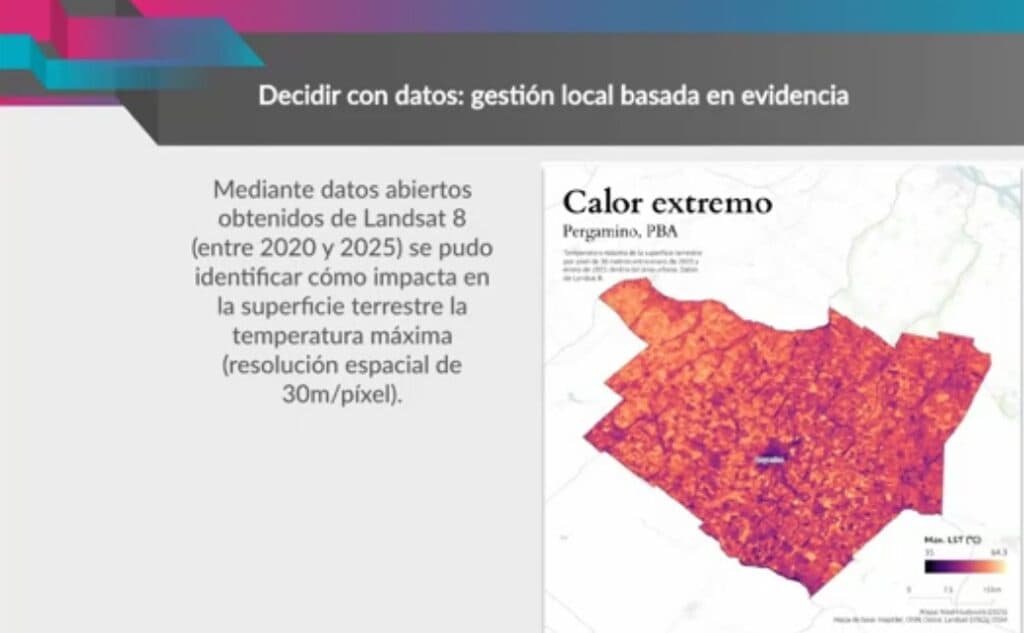
Remote sensing analysis: Using Landsat thermal bands and Sentinel-2 vegetation indices, we mapped land surface temperature at 30m resolution across the urban footprint. We correlated temperature anomalies with land cover, building density, and vegetation presence.
Field validation: In November 2025, we conducted ground-truth temperature surveys across 12 neighborhoods, measuring air and surface temperatures at 50+ locations. This validated the satellite-derived patterns and identified microclimates not visible from space.
Integration with planning: We overlaid heat exposure with census vulnerability data (age, income, housing quality) to create a composite heat risk index. The results fed directly into the municipal Climate Action Plan, adopted in December 2025.
Impacto
The analysis identified three priority intervention zones where high heat exposure overlaps with vulnerable populations. The municipal council adopted the Climate Action Plan in December 2025, with specific budget allocations for:
- Urban tree planting in identified heat islands (2,000 trees by 2027)
- Cool roof pilot program for public buildings
- Heat early warning system integration with municipal emergency services
Federico Gazaba presented the methodology at the provincial "Decidir con datos" webinar series, sharing the approach with 40+ Buenos Aires municipalities. The code and methodology are open source, and two other Argentine cities have begun adapting the analysis.
Video
Gallery
Conducting temperature surveys across different city sectors

Technical meeting with Valeria Pereyra and Federico Gazaba
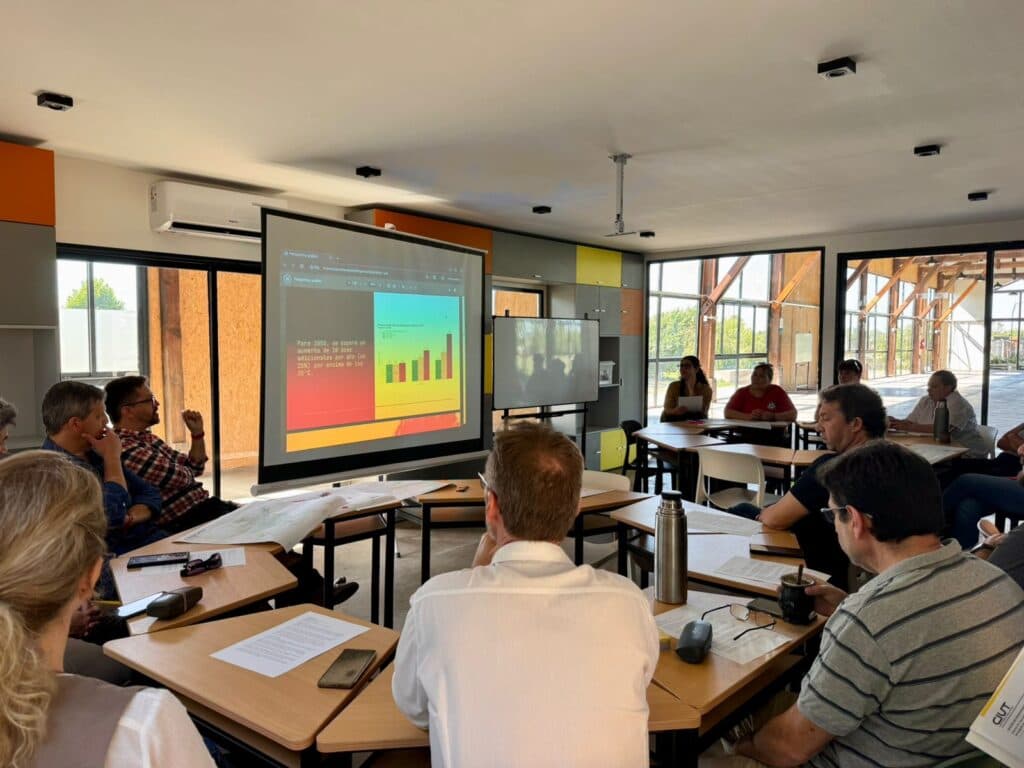
Presenting at "Decidir con datos" webinar series, December 2025
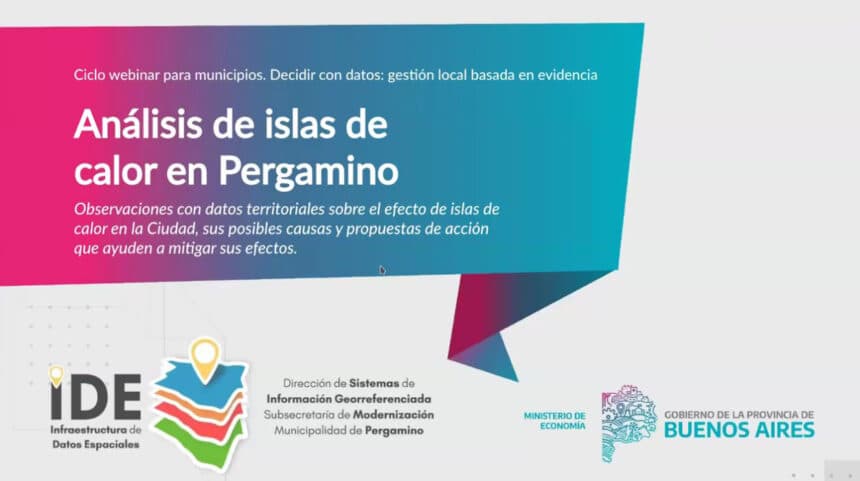
Heat island analysis methodology shared with Buenos Aires municipalities
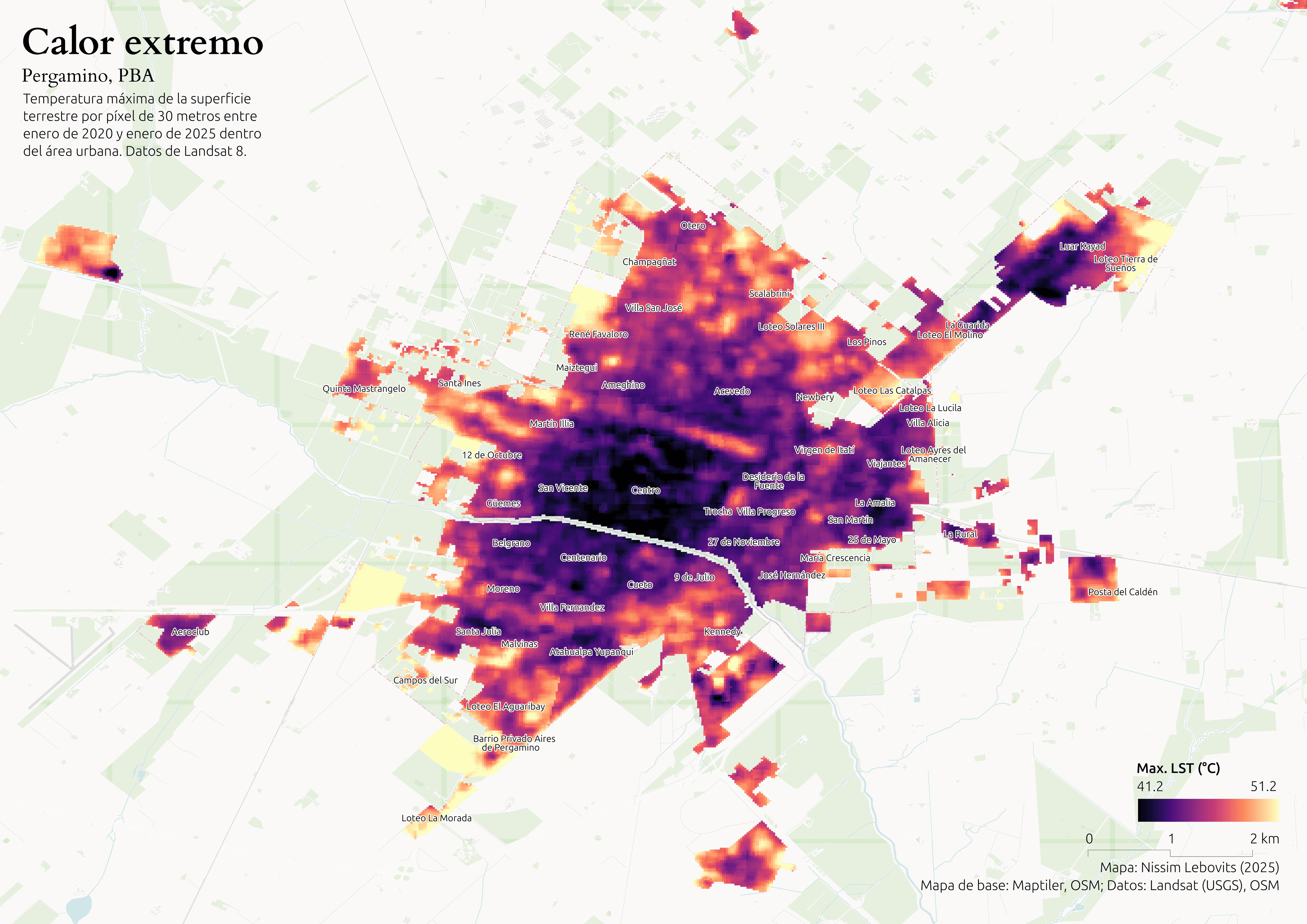
Land surface temperature analysis revealing urban heat islands
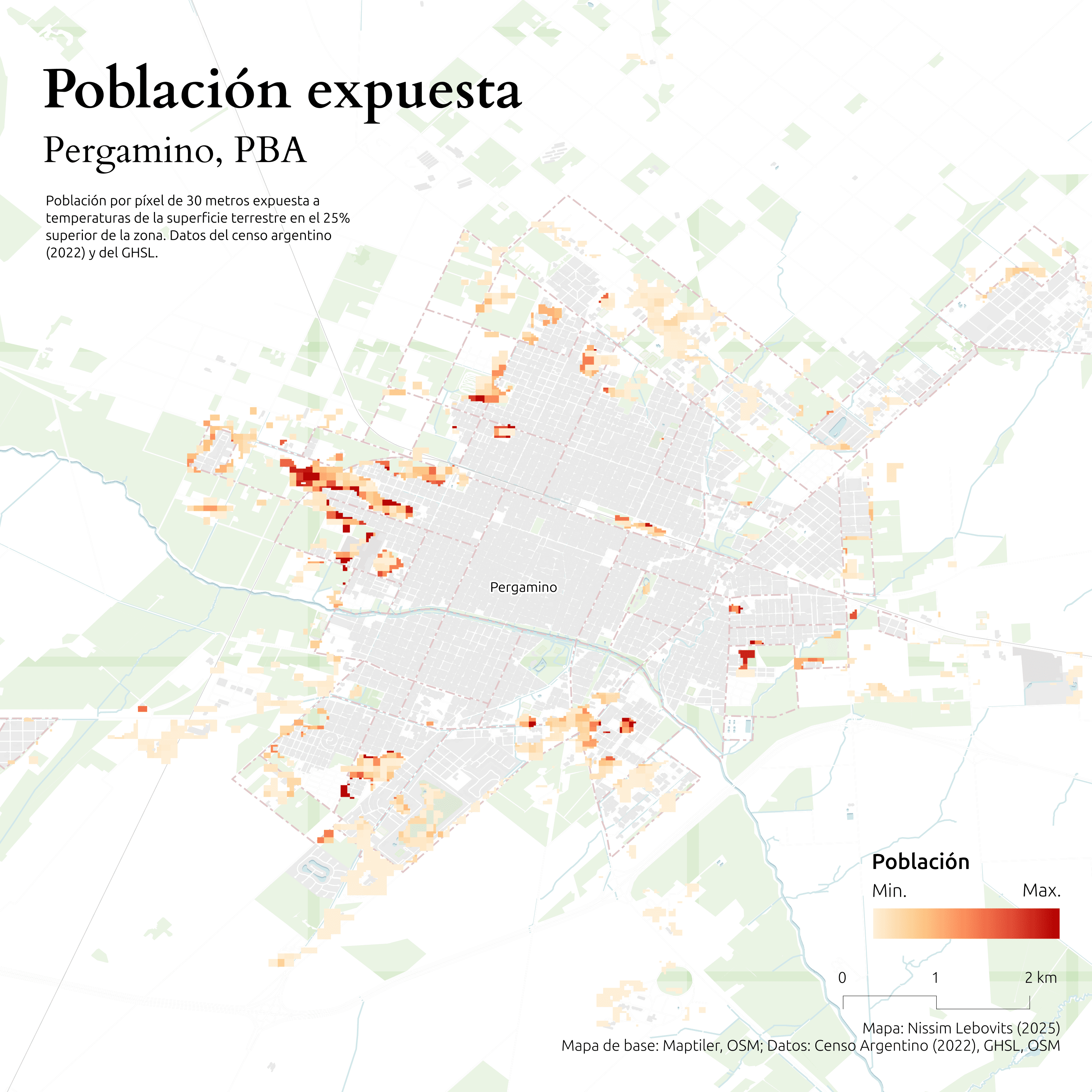
Total population exposure to extreme heat by census block
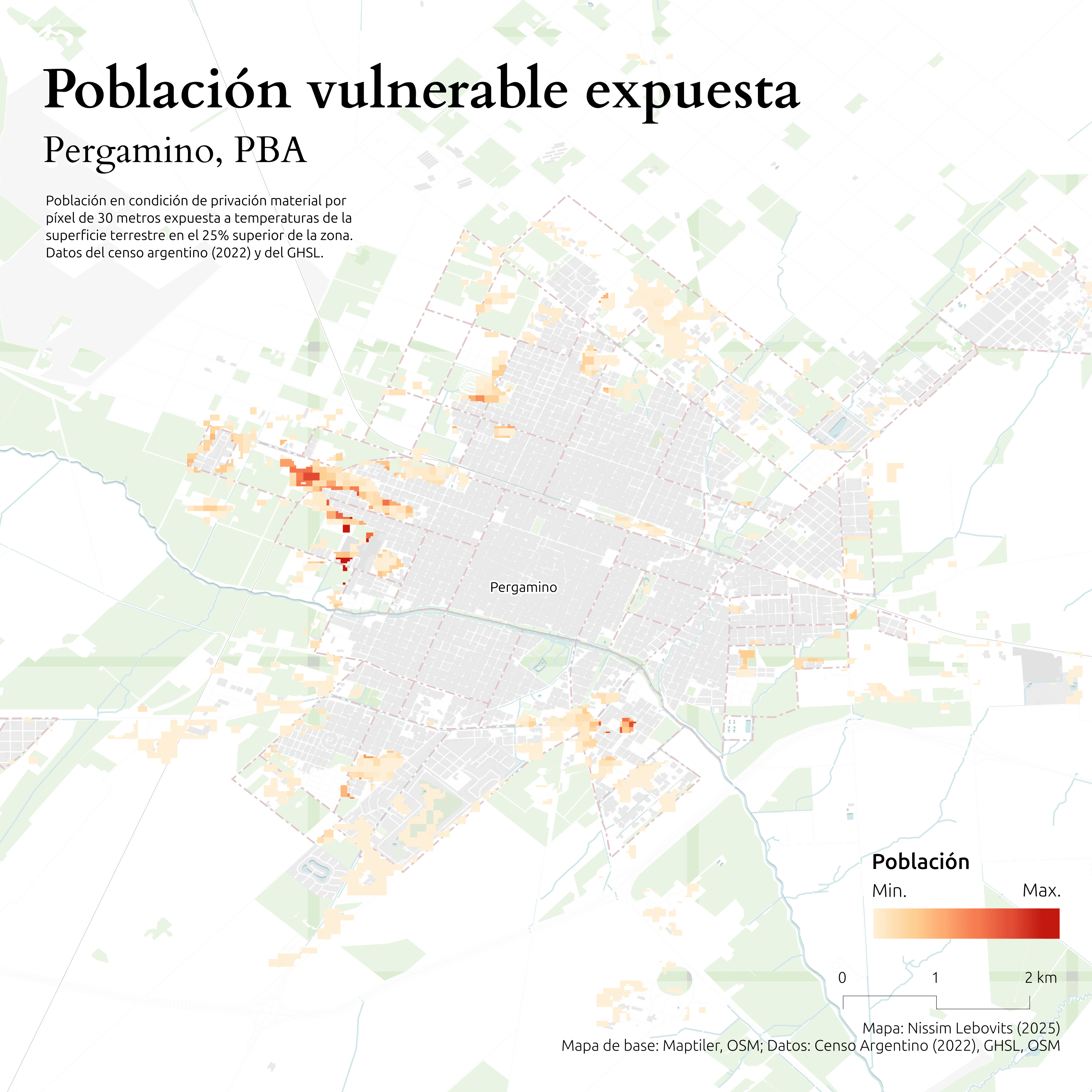
Vulnerable population (elderly, children) exposure to extreme heat
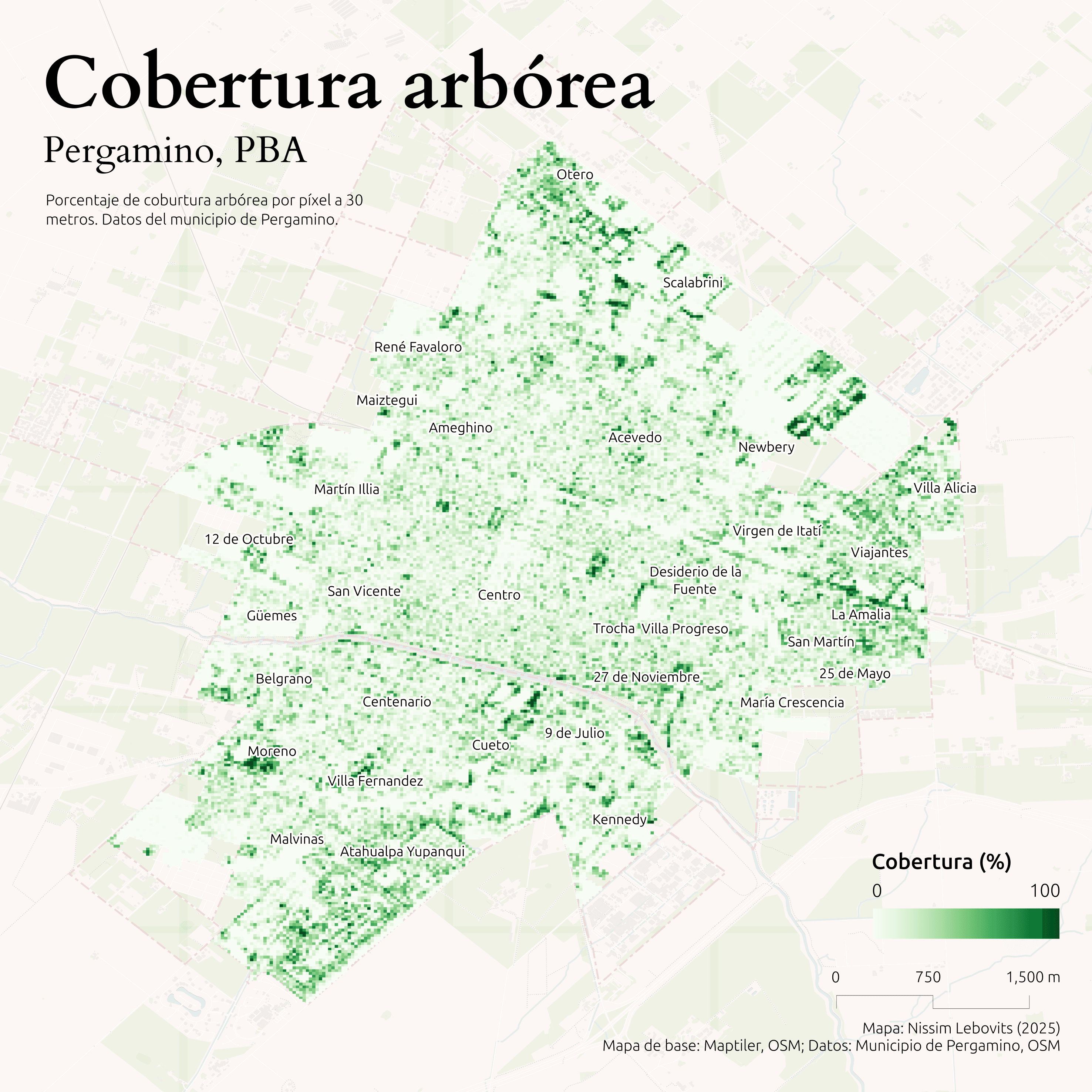
Urban tree canopy distribution showing cooling potential
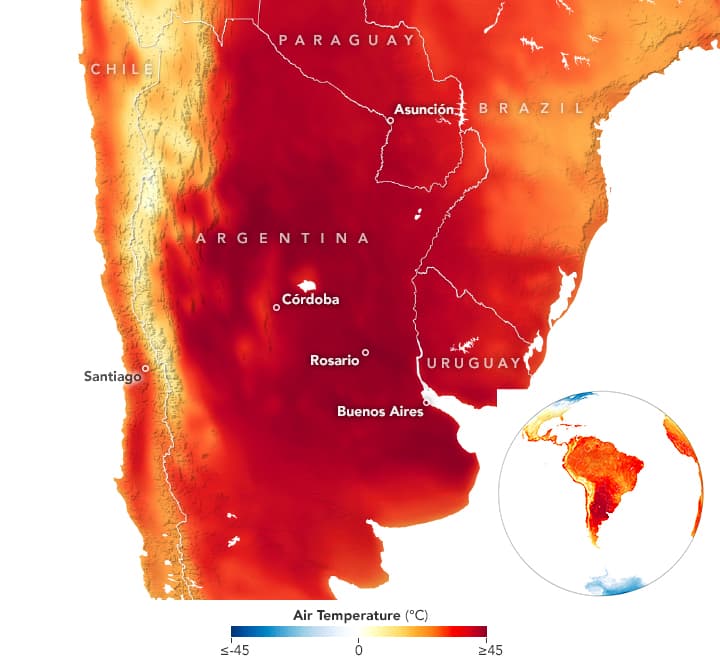
GEOS-5 model showing air temperatures during the January 2022 heat wave

The Paraná River floodplain near Pergamino, seen from the ISS
Press
- El Municipio participó en el ciclo de webinarios "Decidir con datos"
Federico Gazaba presentó la investigación sobre análisis de islas de calor en Pergamino desarrollada junto al investigador Nissim Lebovits.
- Pergamino recibió a investigador internacional para medir riesgo de calor extremo
Nissim Lebovits, becario Fulbright y especialista en resiliencia urbana, realizó relevamientos de temperatura en distintos sectores de la ciudad.
- Compromiso de Pergamino con el cambio climático y las olas de calor
El proyecto generará mapas, datos, análisis y recomendaciones técnicas para identificar sectores urbanos vulnerables.
Notas técnicas
Data pipeline: Python + Google Earth Engine for satellite processing, GeoPandas for spatial analysis, Jupyter notebooks for reproducibility. All analysis runs on a standard laptop — no cloud compute required beyond Earth Engine.
Key finding: Land surface temperature differences of up to 8°C between neighborhoods within the same city. Peripheral neighborhoods built after 2010 showed consistently higher temperatures than older, tree-lined areas.
Validation: Field measurements correlated with satellite-derived LST at r² = 0.78, sufficient for planning-grade analysis.
Citar este piloto
Lebovits, N., Gazaba, F., & Pereyra, V. (2025). Block-resolution heat exposure analysis for climate action planning: Pergamino, Argentina. Human Scale Data. https://human-scale-data.org/pilots/pergamino